Quicksilver USA Made Guitars Home
Quicksilver Guitars Information
- Quicksilver Guitars in Stock for Sale
- Quicksilver Models
- Quicksilver Versus PRS
- Quicksilver Versus Gibson Les Paul
- Quicksilver Guitar Photo Gallery
- Quicksilver Exotic Woods
- Quicksilver Neck-Through Body
- Quicksilver PRS Upgrades
- Exotic Tone-Woods
- Buzz Feiten Tuning Systems
- Quicksilver Cases & Other Cases
- Quicksilver Price List
- Quicksilver Magnetic Cavity Covers
- Ed Roman Guitars Endorsers & Players
- The Quicksilver Platform
- Quicksilver Parts
- Quicksilver Video Demonstration
- Quicksilver Reviews
- Quicksilver Style Kit Guitars
- Quicksilver Neck Mounting Options
- Quicksilver Body Cores
- Custom Guitar Order Form
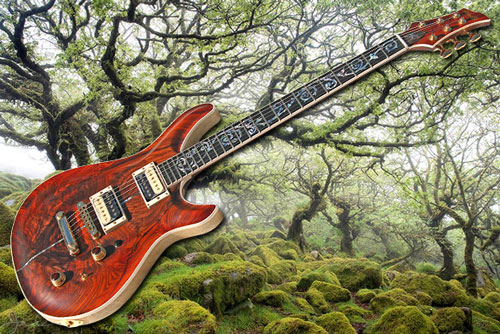
Quicksilver Cocobolo Classic Neck Through Body Guitar
Built For Karen Roth
Quicksilver Guitar VS PRS Guitar
Quicksilver's
Neck Mounting Myths
Quicksilver Models
Quicksilver Exotic Topped Cores
Pick A Core To Be Finished & Built To Your
Specs! Totally Custom!
PRS / Quicksilver Style Kit Guitars
Quicksilver Cocobolo
Guitars
Quicksilver Guitars
are hundreds of dollars less than their only competitor PRS!!! QUICKSILVER GUITARS Higher Quality & Lesser Price Hand
Made To Boot.
On
guitars selling for $5K or more they are usually at least $1,500.00 less
They can be as much as $10K less on guitars with full neck inlays.
If you
don't believe it check for yourself.
If you can find any PRS guitar for less we will
give you twice the difference off of our price.
(Must have same options)
Most of the Quicksilver's we build are
custom made.
We sometimes build models for demos, shows & just because.
These guitars tend to hang around a while.
You can usually get some
kind of a better deal on one that is already built.
Some of the exceptional ones can cost a little more.

Quicksilver Katana New Model
The First Batch Of Bodies Are Ready! Click Here To Pick Yours
| Ed, I recently just purchased a new Quicksilver from your shop, your salesman, Scott, made the transaction seamless and very pleasant and his professional knowledge just made it fun, like being in an adult toy shop with a gift card. My phone number is 619-XXX.XXXX and I plan on buying the next "Caesar Bass" that you build. I spent about an hour and half in your shop, just amazing, the history, the guitars and the selection was "WOW". I will be back, I told you that I was going to buy 3 of your instruments, I now have one and so looking forward to the next one. thank you so much for the experience. John A Harrison Chula Vista Hello John Thank you for your comments.. & Thanks for the order on the Caesar Bass. We are all very excited about the Caesar Bass. It is probably the most advanced bass on the market !!!! |
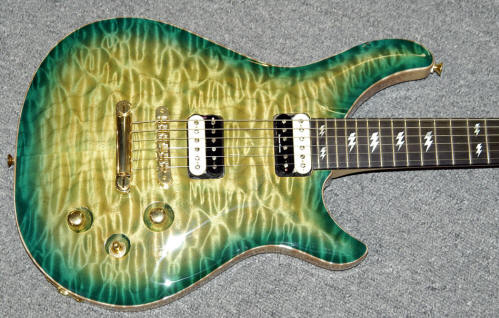
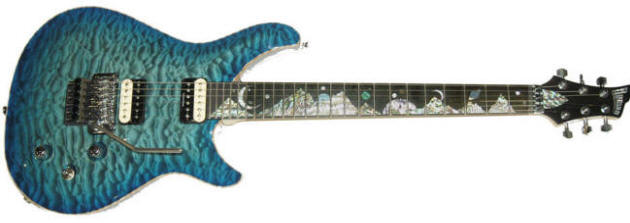
Very Pretty Blueburst Model With Heavy Inlays & Floyd Rose
Trem
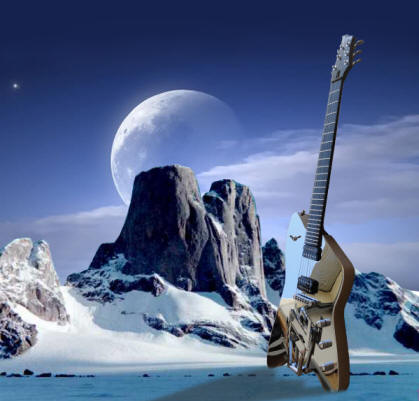
Quicksilver Excelero
Chrome Plated "Jupiter Thunderbird" "Billy
Bo"
Quicksilver Video
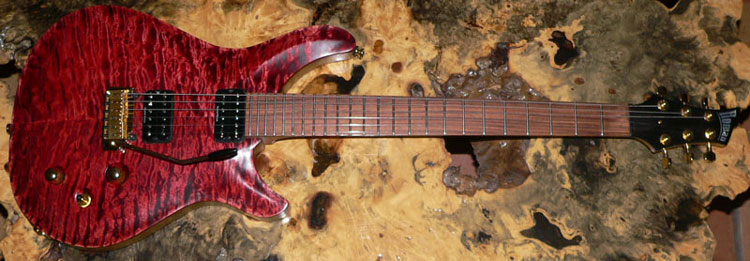
Yes We Will Do Solid Rosewood Necks !!!!

Ted Nugent With His Ed Roman Quicksilver In 2010
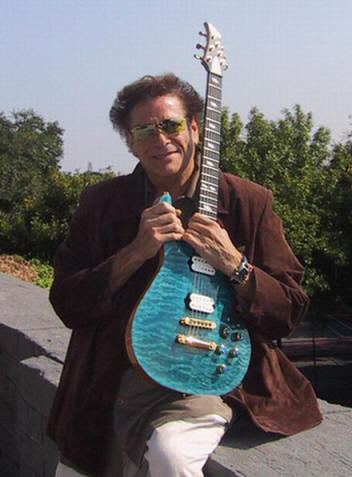
Leslie West With His Quicksilver 2001

Ronny North With His Quicksilver 2011
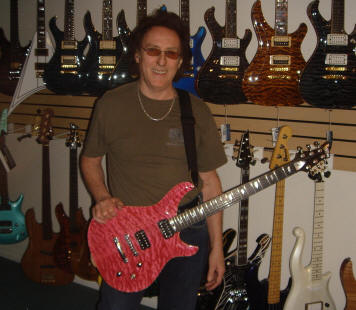
Denny Laine With His Quicksilver 2009
Founder Of The Moody Blues (Sang Go Now)
Played With Paul McCartney 11 years in Wings
Played In Ginger Bakers Airforce & Countless Others
See Details
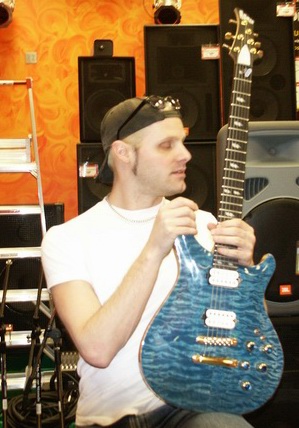
Paul Crook Guitarist With Meatloaf, Anthrax & Sebastian Bach
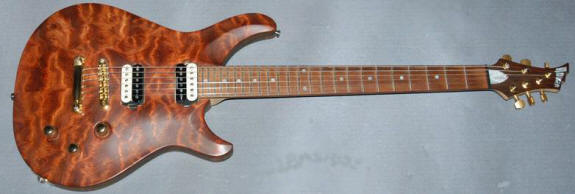
Compare A Quicksilver To Any Other Truly Handmade
Instrument
Lower Price, More Features, Longer Warranty, Nicer Woods.
Much More For Your $$$$$

USA Custom Quicksilver Guitars:
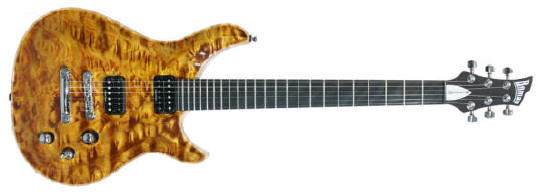
Quicksilver Guitars Are All One Of A
Kind, No
Two Of Them Are Exactly Alike!!!!
CNC Machines !!!!
We Don't Need No Stinking
CNC Machines
Neck Mounting Myths
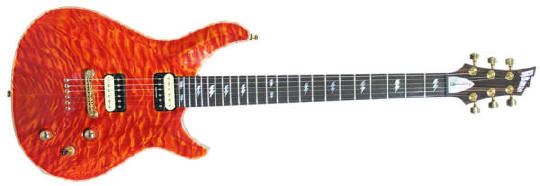
"Quicksilver"
The Most Versatile Sounding Guitars In The World
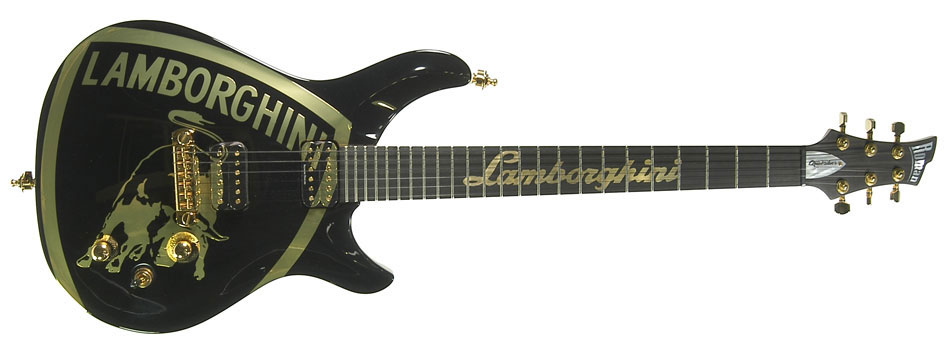
Lamborghini Custom Theme Guitar
We Can Build
A Themed Guitar For You
Suggestions
Your Motorcycle, Your
Car, Your Wife, Your Family
Your Favorite Rockstar. Your Favorite Vegas Hotel
Your Favorite Sports Team, Your Favorite Movie or TV Show
Your Favorite Hobby, Your Country, Your Coat of Arms
Your Motorcycle Club, Your Secret Society
Your Personal Symbol
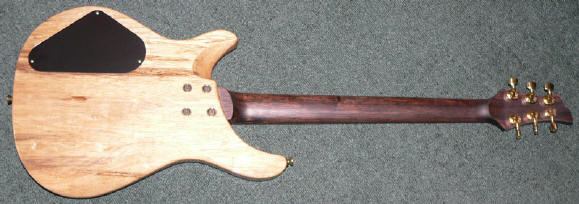
Korina Back With Macassar Ebony Neck
Superstable TM "Machine Screw & Brass Insert" neck fastening system
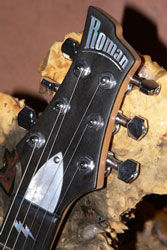
2006 Updated Headstock
A
letter from Joe Gareri in New York
He
Has Been Playing Ed Roman Guitars For 22 Years
Hey Ed,
It was great talking to you last week. I was hoping I’d get to see
you when I stopped by the store but no such luck. I’m going back
out to Vegas in October so hopefully I can hook up with you then.
The store and the website absolutely blew me away! You’re still the
man bro! The custom guitars are awesome! I still love my Roman
custom guitars and they’re the only guitars I play to this day.
I’m playing in a corporate band called Downstream Signal. We play at corporate functions at some pretty cool places throughout the country. We’ll be playing at the Venetian Hotel in October. Here are some pictures from a recent gig in Arizona where we opened up for The Goo Goo Dolls. As you can see, I look a lot different than I did back in 89, but one thing that hasn’t changed is that I’m still playing my Ed Roman “Lefty” guitars!
Stay in touch Ed. I really hope I get to see you in October. I’ll send you an e-mail when I get the exact dates but right now it looks like I’ll be out there the first week in October.
Joe "Lefty" Gareri
Custom Quicksilver Omega Cut
Custom Built for Peter Kupershmid
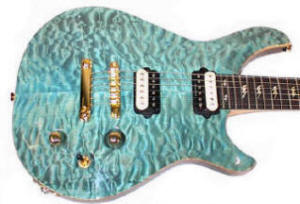
Quicksilver In Virgin Cyan
Custom Built for Gary Herman
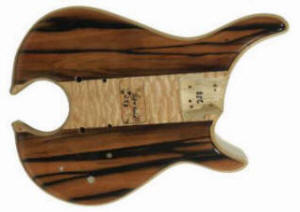
You can even have a custom shaped body built
for a Quicksilver. (Above
Left)
It will still feel, play & sound almost
exactly the same as a normal Quicksilver
Guitar!!!
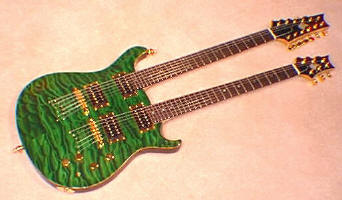
Quicksilver Double Neck
We Also Offer Quicksilvers in 7
String Versions
Hello Stephan,
Just wanted to let you know I received the guitar as scheduled. I
have to say, it is one of the best f#%king guitars I've had
the pleasure of playing. Having the ability to split
the coils with the push/pull set up is killer. Also,
the fact that the pickups are put right on the neck does give
a considerable different in tone.
Long story short, I am a
firm believer and strong supporter of Quicksilver. I can't wait to
head back out to Vegas and get another one.
Cheers,
Alfonso G.
Texas
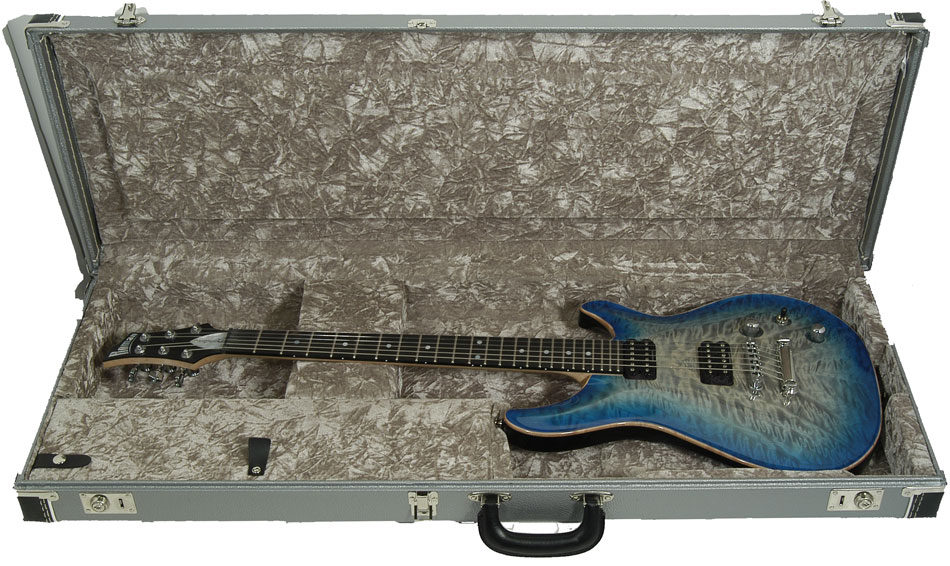
There are several choices of Quicksilver Cases
Ed
All I can say is WOW!! I'm truly speechless. It's not only everything you said it would be tonally and playing wise, but I'm equally blown away by how great it looks. Please pass along my deepest and sincerest gratitude and appreciation to the guys. They did a spectacular job!! You've guided me well and I love my 2 other guitars, but the Quicksilver is just simply better. And while I was extremely impressed by the craftsmanship of the 2 other builders, the Quicksilver craftsmanship is superior. I really wish I could find better words to describe the differences, but I can't, so I'll just say it again - WOW!
Mike Meisinger

There are several choices of Quicksilver Cases
Dear Ed:Base Quicksilver model: $1,695.00 2004
Quicksilver "Woodstock" prototype with White Korina body, ebony fingerboard, lightning bolt inlays & plain maple top with rainbow tie-dye swirl paint job: $3,800.00
Getting Ed Roman to admit on his website that he and his staff "were all wrong": PRICELESS.
You were NOT wrong, however, about the attributes of the Quicksilver. It is far and away the best solid body guitar I have ever encountered. The guitar is a visual masterpiece -- the pictures on the website don't begin to do it justice. It sounds even better than it looks, all the way up to the 24th fret. It's incredibly light, incredibly easy to play...
Basically, it's just incredible. You have yourself one satisfied -- and grateful -- customer.
Sincerely,
Michael N. Gooen
Roseland, NJ 07068
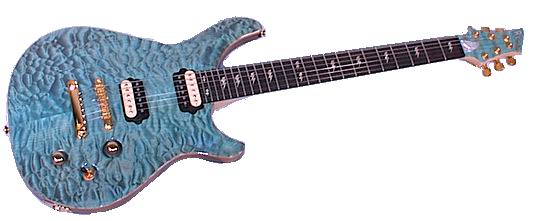
The letter below is one Ed Roman's personal favorites
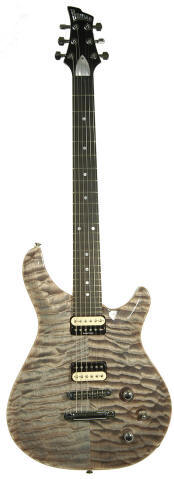
Ed
Wait till you hear this one. I recently bought a used PRS from my local Guitar Center in Dallas. The salesman told me it was the best sounding and playing PRS he had ever had in the store. It had a Tone Pros Tuna-matic bridge on it and the body was slightly slimmer than usual. The salesman at GC told me (I think his name was Harry) said that the guitar was no ordinary PRS, Supposedly it was made for someone in Creed blah blah blah (I found out later that was an outright lie). Several other salespeople all agreed that this guitar had the PRS magic and it was the reason why PRS had such a good reputation.
I played the guitar and it truly did feel great, The neck was rock solid and was incredibly highly figured. The body has a beautiful blue flame top and a natural back. I sat there and tried about 12 PRS guitars, The salesman was right, none of them came close. The guitar had almost twice the sustain of any of the other ones and the neck was smoother and faster.
Anyway I could not resist buying the guitar, In fact I had to borrow most of the money from my bass player. They sold it to me for only $800.00. The reason it was so cheap is there was no serial number on the guitar and the PRS logo was not on the headstock. There were no bird inlays but that was cool ! I was a little worried about buying a guitar with no serial number and no logo but they gave me a fully paid receipt so I figured it had to be OK.
The suited guy at the counter remarked that this guitar held tune better than any other guitar he had ever played. He told me that I made a very wise purchase and reassured me that I had made a good move. (He didn't know how right he was)
I took the guitar home and I used it that weekend on a gig, It performed superbly and I was one happy guy to say the least.
About a week after I got the guitar I discovered there was a push pull pot on
it and that it split the coils on the pickups. What a great surprise. further
fiddling around with it I noticed that the pickups were bolted down solid
instead of floating on springs like all the other PRS guitars. I unscrewed the
pickup and removed it and lo and behold there was the inscription.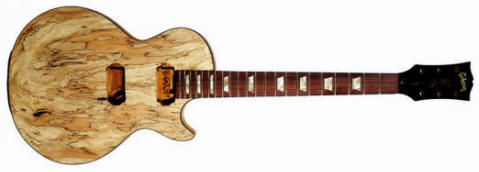
"Ed Roman Was Here". Everything I had read on your website came tumbling back at me like a ton of bricks.
This guitar appeared to have had a custom body not a PRS body, It had the step route pickups like on your site and the neck has that 1500G system that I read about on your site. The neck appears to be an original PRS but I see now the modifications you made to the heel and the tongue where the pickup bolts directly to it like a Quicksilver. That accounts for the extra sustain! I am assuming there is a Buzz Feiten System on this guitar because of the tuning stability.
I could probably sue Guitar Center for falsely representing this guitar. But I am thanking them from the bottom of my heart, because I have one of the most awe inspiring guitars I have ever owned or for that matter even played.
Whoever this guitar was originally built for might have misrepresented it to
Guitar Center but I am the luckiest guy in the world. I was going to buy a PRS decal off that store in Cleveland that sells them
but now I would rather it said nothing.
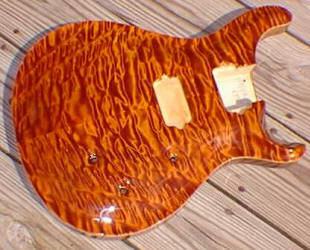
Long Live Ed Roman
Pete Posintini
Plano TX
Reply From Ed Roman
Hello Pete
Glad to see you like that guitar, I originally rebuilt that PRS for a NYC police detective by the name of Manny Poole, As I remember he lived somewhere in New Jersey. The last time I talked with him had been injured in the line of duty and was partially paralyzed. So he must have sold it, I'm surprised it ended up in Texas. I did a number of cool PRS rebuilds for Manny.
Several other things that you missed. The guitar has a Korina Body and Seymour Duncan Pickups, There were also 2 small stainless steel barrels inserted in the tongue of the neck to add mass and stability.
The original PRS fingerboard had been removed and a new ebony one was been installed. look carefully at the frets you will notice you can't see the fret tangs on the side. look at a regular PRS and you will see the tangs are completely visible.
I usually sign the PRS mod's in the pickup cavity and I usually Jokingly print " Ed Roman was here" Ala Kilroy was here... Just a little private joke between myself and someone who will remain anonymous right now. If you want a letter or perhaps a copy of the original invoice for the work please let me know. The Guitar on the right is a PRS that we retopped right here in our shop.
Ed Roman
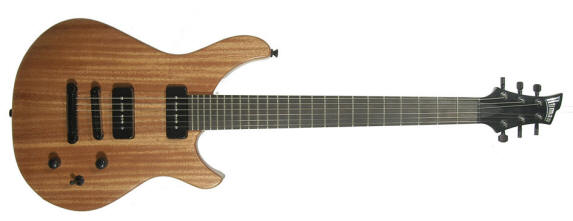
Quicksilver Flatliner CNC Set
Neck, Soapbar, Economy
Model
100% Made In USA
Custom
Guitar Order Form
100% Made in the USA...
This one has ebony fingerboard & black hardware
Available with Humbuckers, Set Neck or
Bolt In Neck No Extra Charge
All the other options just like the top of the line model
You can build this from any type of wood you can have any color, hardware or
electronics
Call Ed Roman For More Info
My Mission Statement
When I set out to build Quicksilver Guitars, I knew that they would have to be exceptional in every way if I was going to be successful selling them. Versatility of tone and ease of playing !!!!!
I want the Quicksilver to be the guitar you reach for when you have a gig and you only have room to carry one guitar with you. I want the Quicksilver to make you a better player. I want you to keep your Quicksilver for the rest of your life !!!!
Ed Roman
Hey Guys
Just wanted to let me know my Koa topped Quicksilver arrived yesterday at the
Surgery Center. I honestly can say it is the nicest guitar I have ever played.
It is just beautiful. The sustain is incredible and it has more tone than I
could ever imagine. It's so nice that after only a day I don't even want to play
my other guitars anymore. Thank you and tell Ed thanks. He may be the name on
the sign but I'm pretty sure you're the brains of the outfit. I do have 2 minor
items of feedback for you.
First item. When talked to you and Ed just before the guitar was shipped, you
both mentioned checking out the Buzz Feiten system. Isn't there supposed to be a
Buzz Feiten decal on the back of the headstock? If so, can you send one to me
please.
Second item. there is a 1/2 inch tear in the black trim on one corner of the
case. It looks like it happened when the box was stapled shut. It's no big deal
and I'm just going to slap a piece of black electrical tape over it and no one
will see it. Just thought you'd like to know.
Anyway, other than the decal, the guitar is perfect. I know it's been in stock
for a while and I just can't understand why no one has grabbed it before. I'm
sure the new ones are as good or better and I'll recommend you folks to anyone I
talk to who will listen.
Looking forward to hearing from you !!
Bob Lehman
Grand Forks, ND
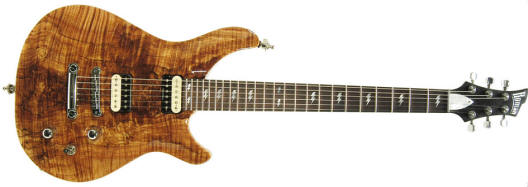
Click Links For Detailed Explanations
| 01 | Tune o Matic Bridge, by Tone Pros. |
| 02 | Front Rhythm Pickup Hard Mounted Directly Into The Neck. |
| 03 | Lead Pickup Hard Mounted Directly Into Top Dead Center Section of Archtop. |
| 04 | Absolutely No Heel. |
| 05 | Deeper Set Neck Tenon & Choice of Neck Angle Based On Bridge. |
| 06 | 1500G Neck Modification (no extra charge). (Satinized Neck). |
| 07 | Strings Thru Body Or Choice of 2 Piece Tailpiece. |
| 08 | Ability To Have Both Pickups On In Dual Coil Mode. |
| 09 | 45 Choices of Body Woods & Various Combinations. Gallery Showing Custom Woods |
| 10 | Ebony Fingerboards. |
| 10a | Macassar Ebony Fingerboards. |
| 10b | Brazilian Rosewood Fingerboards. |
| 10c | Snakewood, Wenge, Bubinga. Palisander, Bloodwood & More Exotic Fingerboards Available |
| 11 | Binding Available Body, Neck & Headstock. |
| 12 | Abalone Purfling Available Body, Neck & Headstock. |
| 13 | Choice of Any Pickup Available. Choice Of Any Electronics Available |
| 14 | Step/routed TM, Solid Mount Pickups. |
| 15 | Choice Of Neck Angle. |
| 16 | Choice of any inlays at all. |
| 17 | Customer Allowed To Supply His Own Components. |
| 18 | Choice of 8 Different Tremolo Systems |
| 19 | MIDI Available. |
| 20 | Choice Of Any Color. |
| 21 | Custom Graphics Available. |
| 22 | Custom Body Thicknesses Available |
| 23 | Custom Headstocks Available. |
| 24 | No Charge Set Neck. Most Companies Charge $350.00 or More For That Option |
| 25 | Neck Through Bodies In Stock & Available |
| 26 | Palm Cutaway On Back Of Lower Front Bout. |
| 27 | Top & Back Woods Harmonically Matched For Pitch & Tone. |
| 28 | LSR Tuners Available. |
| 29 | Custom Inlays Available. |
| 30 | Full Contact, Direct Coupling |
| 31 | Nipped Fret Tangs. |
| 32 | Custom Body Shapes Available. |
| 33 | Lower Cost Flat Top Bodies Available. |
| 34 | Superstable TM "Machine Screw & Brass Insert" neck fastening system (No Wood Screws) |
| 35 | Custom Made Wooden Knobs Available. |
| 36 | Custom Made Wooden Pickup Rings Available. |
| 37 | Custom Made Body Shapes Available For Nominal Cost. |
| 38 | Guaranteed Lower Price Apples To Apples. |
| 39 | Most Custom Wiring No Charge. |
| 40 | Compound Radius Available.. |
| 41 | Left Handed Available. |
| 42 | Piezo Available With Low Cost MIDI Upgrade. |
| 43 | Oversized & Petite Models Available. |
| 44 | Duncan Premium Black/Back Pickups Included All Models No Charge. |
| 45 | Choice Of Different Models With Any Option. |
| 46 | Chambering Available. |
| 47 | Custom Designed Sound Holes Available (Hollow Models). |
| 48 | Angled Neck Joint |
| 49 | Real Graphite Necks Available (not just composite like all the others) |
| 50 | Sustainer System Available Built In |
| 51 | Wooden Cavity Covers Available Optional |
| 52 | Magnetic Bridge System |
| 53 | Huge Selection Of Fantastic Tonewoods |
1. Tonal Versatility
I wanted the Quicksilver to be able to reproduce as many type
of sounds as technologically possible.
I wanted the guitar to be able to faithfully reproduce a Les
Paul, ES335 or an SG Humbucker tone. I wanted the guitar to be able to sound
like a Strat, Fat Strat and Telecaster without dropping out the unity gain. I
wanted the sustain of a neck through body like a USA made "BC Rich" or
"Jackson". I wanted that original signature Eddie Van Halen "Brown Sound" like
an early Kramer or Ernie Ball and I wanted the jangly 60's Rickenbacker tone. Lastly I wanted the smooth creamy upper mid range tonality of an early PRS
guitar with a sweet switch on it.
A tall order, keep reading it gets taller.
To further complicate matters I wanted it passive. (No batteries). I believe that whatever you gain using active pickups you lose in consistency of sound later. Batteries are never consistent, so tone will suffer from this. I wanted the sounds to be instantly attainable and immediately available without too many switches and controls. After all, they won't sell if a salesman can't easily demonstrate the different tones and how easy it will be for the customer to achieve them. I actually wanted the guitar to be able to achieve a traditional jazz tone. My requirements were that the guitar be capable of attaining a super clean sound (Surf Music Clean) at loud volumes, and not go muddy when I turned the tone knob down to zero. I wanted an optional natural acoustic piezo electric system available that could be updated when new technology was introduced and would never go obsolete. I wanted an optional MIDI jack system that would actually work. Believe me that part was hard but the results were extremely good. (Call for more info) The guitar had to also be capable of getting that 80's upper midrange crunchy tone and not feed back at loud volumes. The guitar had to be capable of at least 90% performance when coupled with a medium cost, solid state amplifier. I required the MIDI Trigger system onboard. I would not accept using that Roland pickup. I also wanted the customer to be able to have the option to drop the MIDI System in at a later date. This meant that the guitar needed to be available with a MIDI jack plate preinstalled. I found that many customers wanted MIDI but could not afford it when the purchase was actually made. It is relatively inexpensive to pre-mount the MIDI jack plate & provide the room for the extra electronics as long as you do it before the guitar is painted.
I had several problems to overcome, To say the least:
-
The hardest one was reproducing the Les Paul's tonality without the inherent Les Paul muddiness.
-
Reproducing a single coil Stratocaster and Telecaster sound without sacrificing the unity gain.
-
The Rickenbacker's jangly 60's sound was impossible to reproduce, believe me I tried and failed. I was able to achieve a wimpy version when the guitar was equipped with an older style piezo electric system. For all intents and purposes though, you would still need a Rickenbacker to achieve that tone.
-
Getting pickups that would not go muddy at high volume clean settings.
-
Pickup placement, height and spacing between themselves.
-
Mounting the pickups to the guitar so that the passive vibration of the pickup would match the passive vibration of the guitar body. (Spring loaded traditionally mounted pickups are the cause of muddiness)
-
Dead spots on the neck had to be dealt with. A real problem on a long thin neck.
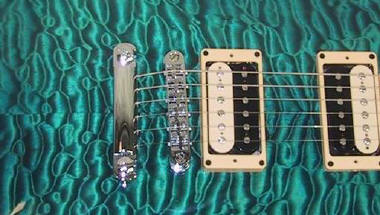
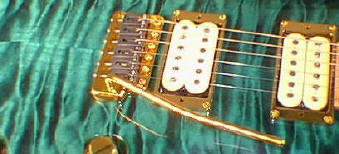
Quicksilver Green Velvet
2. Playability
I played with several different size neck tapers, different
thickness and radiuses. I experimented with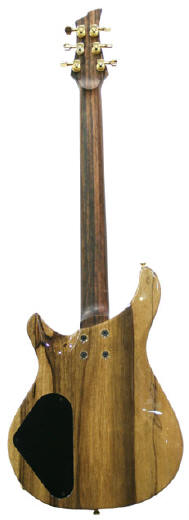 different finishes on the neck and
fingerboard and I spent hundreds of hours on the heart of the guitar (The
Neck Joint). I concluded that there had to be a multitude of necks
available. When a customer orders a Quicksilver,
there will be a short consultation with myself and the customer regarding
exactly what the customers requirements are. The customer will be advised on all
the options and the neck will be constructed using the information from that
conversation. The reach to the high frets had to
be absolutely effortless. The problem here was that PRS had a body cove
trademarked on the lower bout. I thought I was going to need that for comfort.
I was quite happy to discover that by coving out the back part of the lower bout
it actually worked better.
different finishes on the neck and
fingerboard and I spent hundreds of hours on the heart of the guitar (The
Neck Joint). I concluded that there had to be a multitude of necks
available. When a customer orders a Quicksilver,
there will be a short consultation with myself and the customer regarding
exactly what the customers requirements are. The customer will be advised on all
the options and the neck will be constructed using the information from that
conversation. The reach to the high frets had to
be absolutely effortless. The problem here was that PRS had a body cove
trademarked on the lower bout. I thought I was going to need that for comfort.
I was quite happy to discover that by coving out the back part of the lower bout
it actually worked better.
3. Aesthetic Beauty
Obviously the guitar had to be beautiful, Otherwise it would
never sell.
So I looked at 6 of the most beautiful body shapes on the
market. I wanted the guitar to fit into this level of beauty. So I did my best
to research any trademarks and I was able to come up with the design you see on
this page.
4. Weight
Approximately 6 lbs average. I built one that was 5.3 lbs it was made
from Spalted Maple & Korina, I am offering an ultra-light model that comes in
under 4 lbs
5. Durability
The only inherent weak point on a PRS guitar is the neck joint. They don't break very often but when they do they always fracture on the back directly below and above the neck. The cracks are usually about 1 inch long and I have never seen them crack in one place. In every single instance it cracks evenly in two places (Directly at the lower edge and upper edge of the neck joint on the back of the body of the guitar.
I am using almost 1/4 more wood in those locations. This was not an easy trick because I wanted the neck to be interchangeable with a PRS and I wanted to keep the same slim body design as a PRS. I was able to do it with the neck angle placement. I got a bonus, the tension of the strings is slightly more than a PRS. This added tension coupled with the direct contact construction really added to the sustain and tone of this guitar.
6. Price
I wanted the Quicksilver to be affordable and useful to the everyday player. I
wanted to come in below Gibson, PRS, Abyss, Moonstone, McNaught,
JET, McInturff, Warrior, & Centurion.
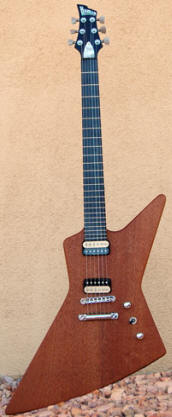 This is the best sounding guitar with this shape that we have ever built !! The
secret is in the Neck Mounting.
This is the best sounding guitar with this shape that we have ever built !! The
secret is in the Neck Mounting.
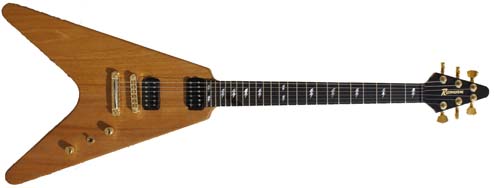
The Quicksilver Is Now Available With any Type Of Custom Body You Want.
We will build your custom guitar in any shape you want, Currently we
are Building a Jupiter Thunderbird Body Shape For Billy Gibbons (See
The Excelero)
This Guitar Was Built For Arthur Busch.
This Guitar Features A Very Light Honduras Mahogany Body With A
Jet Black ebony 24 Fret Fingerboard.
This Guitar Plays Sounds & Generally Behaves Just Like Our Original
Standard Quicksilver. The Neck & Body is Completely
Interchangeable With Any PRS 24 Fret Guitar Or Any Quicksilver
Guitar.
This Guitar Comes In 42 Different
Types Of Wood & Is also
Available with Custom
Graphic Paintjobs. We Also Make this Guitar with An
Aluminum Chrome Plated Body.
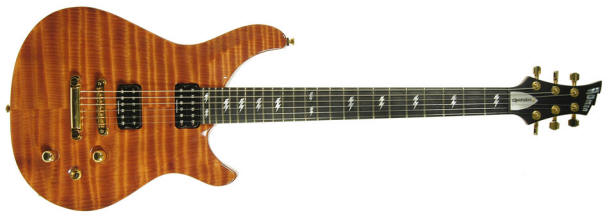
Giant Sequoia
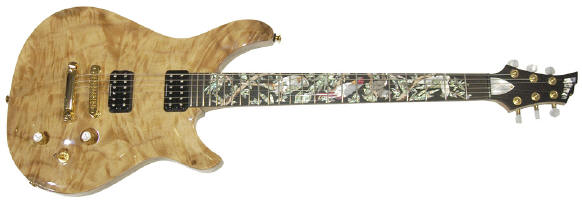
Over 45 different kinds of wood available
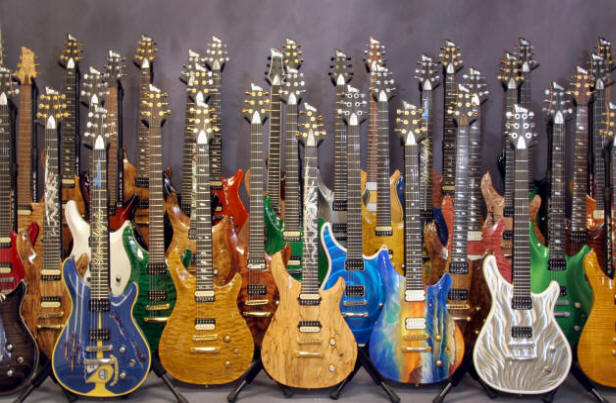
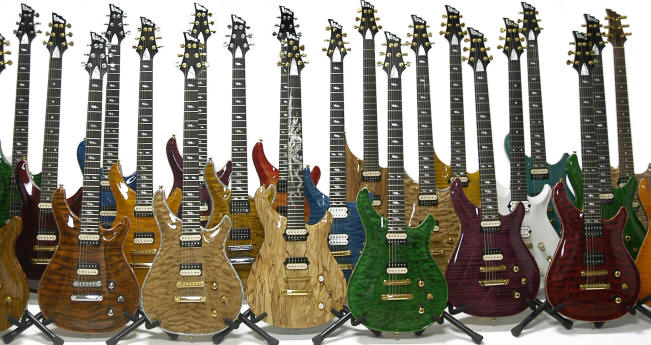
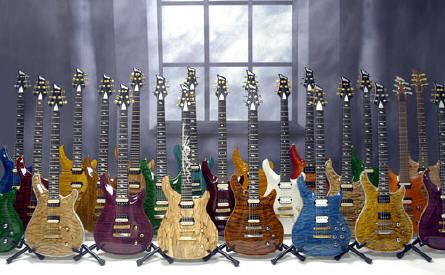
Group of USA Custom Quicksilver Guitars:
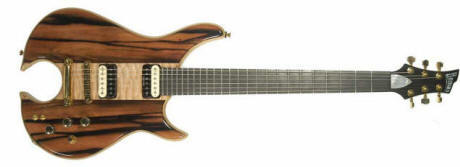
Good Selection of Quicksilver Guitars in Stock
Neck Mounting Myths #1
Bolt on Necks Have Gotten a Bad Rap
By Ed Roman
Many players assume that to build a good guitar it should have a glued on neck. I for one definitely do not believe that. Just because most companies charge extra for that option I think people just assume that it’s better because it usually costs more.
I am going to attempt to dispel that myth. In fact I personally think that a normal set neck is the absolute worst way to construct an electric guitar! It actually costs less to glue in a neck than to bolt one in correctly. Gluing up a neck is pretty basic. You apply glue inside the neck joint, slide the neck in and clamp it down. A bolt in neck requires a lot more work, there is no room for a sloppy fit like on a glue in neck. The cost of stainless bolts and press fittings are far higher than the cost of a little glue. The labor factor requires 4 holes drilled and countersunk. The tolerances are extremely tight on a good bolt on neck where the tolerances are far less important with the application of glue. If you make a mistake and drill incorrectly it’s time to throw away the body. On a glued up neck there are no holes to drill and less chances of a mistake.
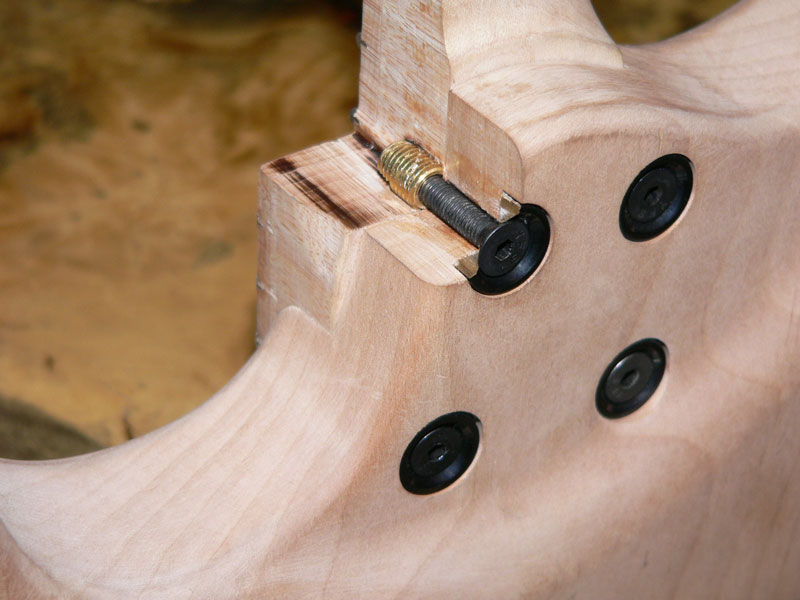
I know, I know it’s been done that way for 60 years! why change now? Why not keep our heads buried in the sand & continue thinking like we did in the 50’s & 60’s?
Any luthier will tell you that the neck breakage occurs more on set neck guitars than all other guitars combined. The fact is I have repaired less than 15 bolt on necks in 32 years. I have repaired well over 3000 set necks and at any given time there are probably at least 6 of them broken in my shop.
First of all there is absolutely nothing wrong with a bolt on or bolt in neck as
long as it’s done right. I must stress the part about it being done right !!!!!
The glue between the neck & body of a guitar will prevent 60% to 70% of high end
tone transference. For example, try to get a funky nasal ducktone twang on a
glued in neck guitar. It won’t happen.
Bolt on necks originally got their bad reputation during the 70’s when companies were
making them with ill fitting or loose neck joints. A loose neck joint causes
instability and detracts horribly from tone quality. A loose neck joint will
also cause tremendous loss of sustain. Some companies in the 70’s were mass
producing guitars as fast as they could and were simply not paying attention to
the neck joint! The necks were not fitted correctly and in many cases the
strings were actually hanging off the edge of the neck.
A lot of criticism is leveled at the 3 screw neck mounting plates of the era.
Personally I like the concept of the tilting neck which of course is only
available with a three bolt neckplate.
Thanks to modern machinery and woodworking techniques neck joints are a lot better & tighter today. We now know much more about guitar construction than we used to. Guitars in general are a lot better today, even the Mexican ones are better than some of those USA guitars from the 90’s. A tight neck joint equals a good guitar!
The neck joint is the heart of the guitar, If the neck joint is set up properly
the guitar WILL always sound better.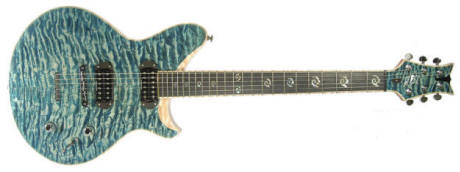
In my shop we make it a rule to mount each neck so tightly that it’s almost a force fit. The technician should be able to physically pick up the guitar by the neck so that the body is suspended and the fit alone should be enough to hold the body to the neck.
My sure fire test is to take a thin guitar pick and try to slide it between the neck and the body. If I can get the pick into the crack then I know the guitar will be lacking in tone & sustain.
You Can
Purchase An Ed Roman Neck for Many Different Guitars
Click This Link To See Them
Synopsis
Bolt On Vs. Bolt In
Both ways work very well as long as you get a tight neck fit. The bolt in like
the Quicksilver is superior because there is no protruding flange to bolt the
neck onto. The neck actually bolts in through the back of the guitar.
Consequently you get better stability, even more tone & sustain and as an added
bonus you can reach higher up the neck. More notes, more better sounding notes
!!!!
The Quicksilver goes one better, The Quicksilver actually incorporates the
rhythm or neck pickup right into the neck joint. To my knowledge no other
company affixes one pickup directly to the tongue of the neck and the other one
directly to the body. We have been doing this modification to PRS guitars for
more than 15 years. It really works well on a PRS the difference is noticeable
even for a novice player. The modification is completely invisible and you
cannot tell it has been done except by listening to it. We do it to set neck
models and to Bolt In models. Personally I think it works best on a Bolt In
Model but even a novice can easily hear the difference on a set neck version of
a PRS.
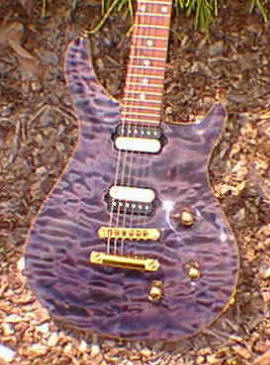
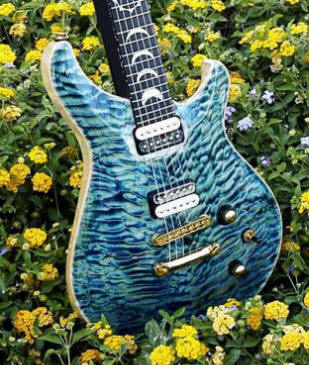
Yo Ed
That Cherrywood Quicksilver U sent me is
exactly what I wanted.. Very understated & minimalistic. Several of my friends
here locally in Duluth have Quicksilver's. I have played theirs and fell in
love.
Currently I have 2 PRS Customs a PRS Santana <bad mistake I hate it and
nobody will buy it> I also have a Terry McInturff and a Timtone Headless
<I wish I had found out about you sooner> The Timtone is nice but it was
very expensive and not worth what I bought it for. The McInturff sits in the
closet with the PRS Santana. I am not fond of either of those and I have tried
to sell them on Ebay and it has cost me about $100.00 from feeBay. It's like
throwing good money after bad.
The Quicksilver you sent me is a marvelous piece of machinery. I can't get over the neck, the tone is creamy like BB King's Lucille, I can switch to a burning Les Paul, Brown sound and best of all I can even get a funky Strat tone. This guitar is everything U said and more, It has made me a better player and except for that bad Sperzel tuner it's been totally perfect.
I am coming to Vegas in January for CES, I want
to buy another guitar I will bring both my PRS customs to trade. Don't worry
they are both 24 fret models. I think I want to get one of your neck through the
body models this time.
I don't need anything fancy, I just want it to sustain as well as this guitar.
Thanks for everything
loyal customer for life
Louis Carlson
Duluth MN.
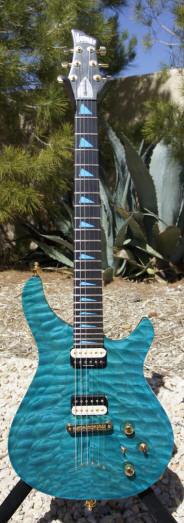
Custom Made For Dave Erickson