Home > All Guitars > Mosrite Guitars
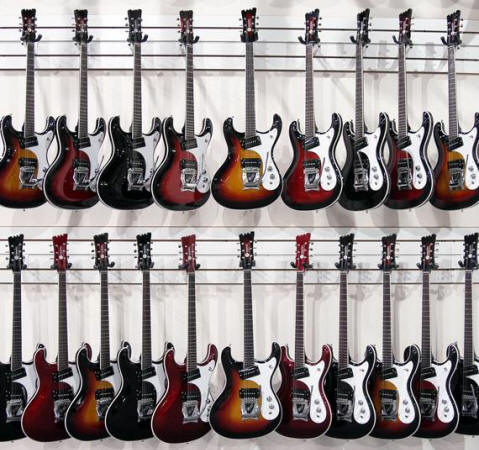
Original Mosrite Of USA Guitars
 
Mosrite Guitars - IN STOCK Mosrite Price List
Mosrite Models Johnny Ramone
Mosrite Bass Guitars Fred Sonic Smith
Mosrite Counterfeits Joe Maphis
Mosrite Cases Kurt Cobain
Mosrite Factory Tour Barbara Mandrell
Strawberry Alarm Clock The Ventures

Semie Moseley, The Man The Myth The Legend

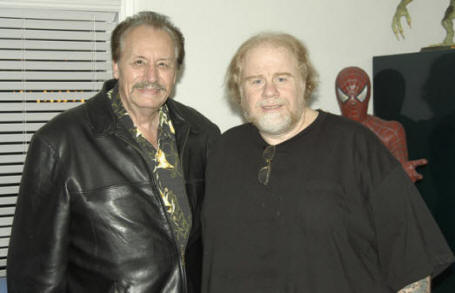
Ed Roman & Nokie Edwards of the Ventures 2006
Ed Roman Enters his 8th Year as the Sole exclusive Distributor For Mosrite & CBGB Guitars

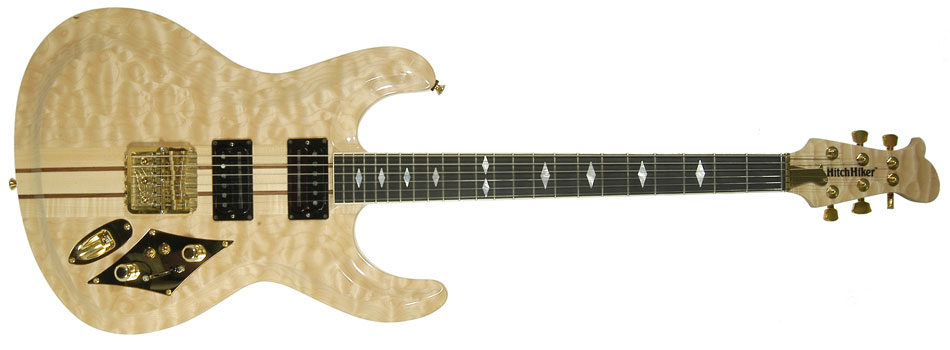
Nokie's Custom Made Mosrite Styled Guitar
Ed Roman is now offering Quilted Mosrite Bodies call for Information

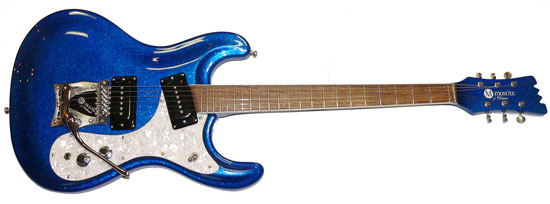
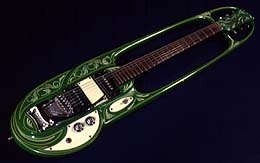
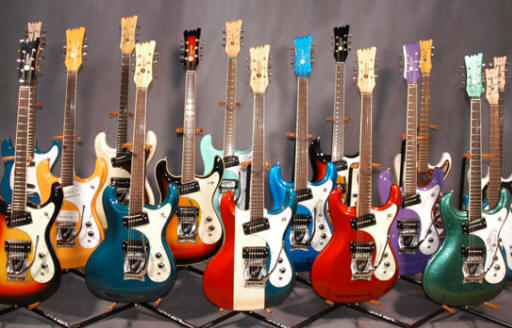
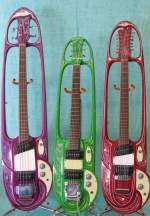
Originally made for The Strawberry Alarm Clock "Incense & Peppermints" in the 60's these guitars were years ahead of their time.

Semie had once again created something futuristic.  Ed Roman can build you a copy of one, two or the entire set of these guitars.

Ed King of Lynyrd Skynyrd was one of the original members of the Strawberry Alarm Clock.

Be the first on your block to own a set of these wild guitars.

These guitars come in 6 string, 12 string, 4 string Bass, Baritone & Doubleneck versions.

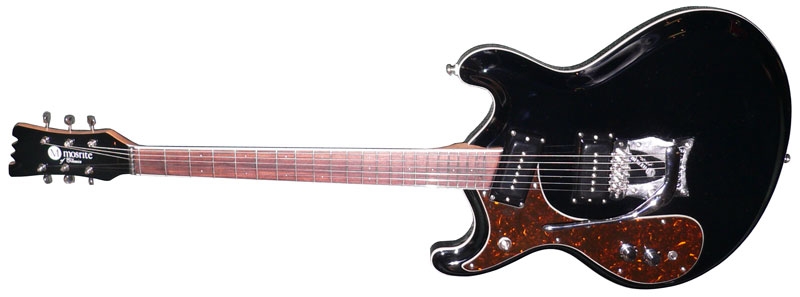
Mosrite of USA Custom Joe Maphis Left Handed Guitar

Custom Mosrite Left Handed Joe Maphis Model

These Are Not The Faked Build-ups Beware of Cheap Imitations
Only Ed Roman Has The Real McCoy

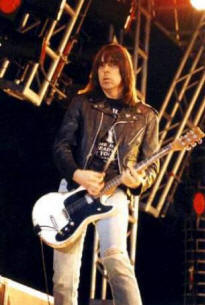
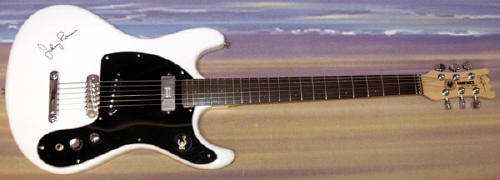
Mosrite Johnny Ramone

Huge Selection Of Necks Available


Mosrite Tremolo Spring   $24.00
Mosrite Tremolo Bar    
Mosrite Vibramute Tremolo    
Mosrite Johnny Ramone Body   $699.00  USA Made (White Only)
Mosrite Johnny Ramone Body   $350.00  USA Made (Gold)
Mosrite Johnny Ramone Pickguard   $100.00  USA Made (Black)
Mosrite Tuning Pegs   $88.00 a set
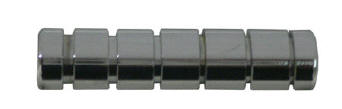
Mosrite Nut   $66.00 
Mosrite Pickup    
Mosrite Original Bodies    
Mosrite Original Necks    
Mosrite Guitar Nut

Mosrite

50th Anniversary Mosrites

Only A Couple Still Available Call Today


Mosrite

  Johnny Ramone Signature Model Signed by Johnny Ramone.
 With a Photo of Johnny Ramone Signing it.


Mosrite
Call now to reserve yours early!


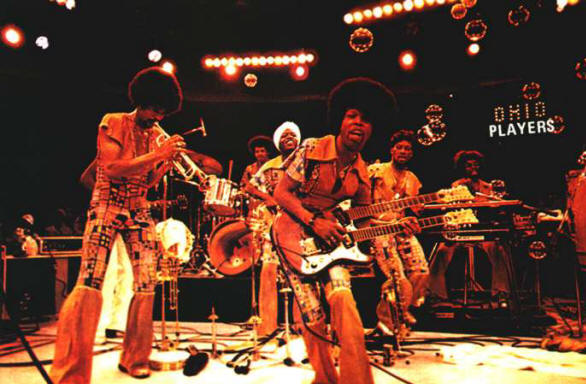
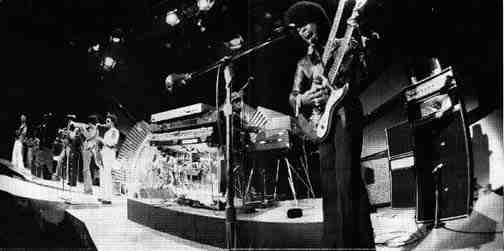
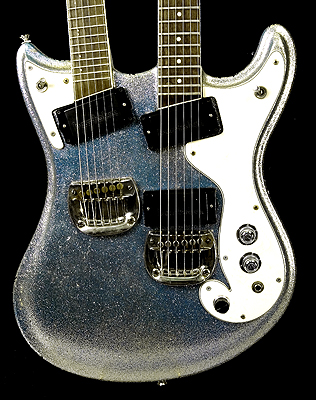
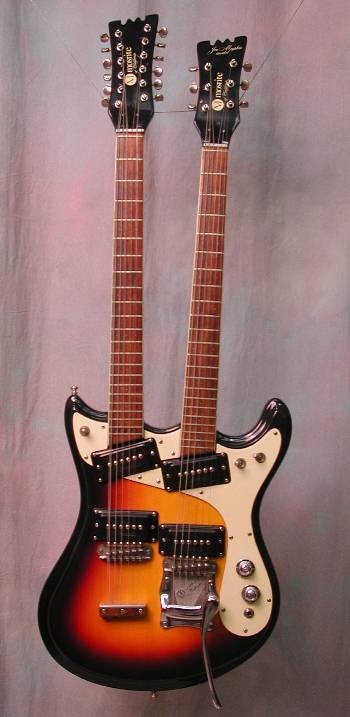
Did you know that Mosrite built the first commercially available doubleneck electric guitar?

Kurt Cobain Mosrite

 kurt cobain mosrite

Kurt Cobain With His Right Handed Upside Down Mosrite Gospel Model.
Ed Roman has the very last one of these in stock


Custom Made Mosrite For Barbara Mandrell


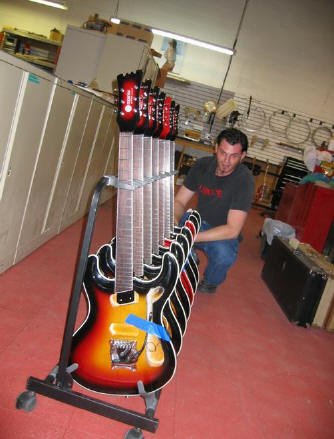
Final Assembly in our Las Vegas Custom Shop
 

Semi Moseley Trivia

I recently found out from John Hall at Rickenbacker that Semi Mosely (Mosrite) worked for Rickenbacker in the early 50's as a guitar builder.  John told me that "Semi was let go for designing some overly radical guitars without permission in Rickenbacker's shop."  In 2004, I acquired the exclusive rights to the real Mosrite designs for the USA, Canada, & South America.  I have been delving into the company history ever since. 

On a side note, there are over 35 different companies offering unauthorized copies of Semi Mosely's designs as of this writing.  That would make Mosrite the world's third most copied guitar.  The Mosrite is a cool guitar. The Mosrite is a great guitar.  It is perhaps the first real surf guitar, but it does not make sense that it should be so copied.  The market for Mosrite guitars is very small.  In fact, we reissued a limited edition 50th anniversary model of their most famous model in 2004.  I think I only sold about 42 of the 50.  Talk about a limited market! I actually still have inventory.


At the height of the "Flower Power" era of psychedelic music in the mid sixties, Strawberry Alarm Clock gave us one of classic rock's most memorable songs, 1967's, "Incense and Peppermints". Formerly known   as The Sixpence, this California based group was originally made up of Ed King of (lead guitar), Lee Freeman (rhythm guitar), Gary Lovetro (bass), Mark Weitz (organ), and Randy Seol (drums).  (Ed King went on of course to play with Lynyrd Skynyrd) 
The story of the song, "Incense & Peppermints," is a fascinating one. The recording was initially intended as a 'B side' and the lead vocal is actually that of a friend of the band, 16 year old Greg Munford, who was just hanging around during the session. He was not even a regular band member, but ended up singing a tune that would rocket to number one in the United States and sell over a million copies. Despite this success, Munford never actually joined the group.

Before recording their full-length debut album, the band added a second bass guitarist, George Bunnell, who was also an accomplished songwriter who's contributions enhanced a style that coupled hippie trappings with enchanting melodies and some imaginative instrumentation.

In the summer of 1967, The Strawberry Alarm Clock contributed music to the film "Psych-Out", as well as appearing in it. The band toured the US with some of the biggest acts of the day, but poor management and dissention among the members started to tear it apart. Bassist Gary Lovetro left the band before they recorded their second album, "Wake Up It's Tomorrow", which also appeared in 1967. A second single release, "Tomorrow" made it to number 23 in January, 1968.

Between 1968's album, "The World In A Seashell" and 1969's "Good Morning Starshine" the band went through a number of line-up changes which undermined their direction. To add to their problems, a manager who double-booked them on several occasions brought on many lawsuits.

Although they remained together until 1971, the Strawberry Alarm Clock was unable to regain its early popularity and saw only limited success on the singles chart with "Sit With The Guru".

Ed King later joined Lynyrd Skynyrd, while several of his former bandmates reunited during the 80s for a succession of "summer of love revisited" tours. Their memory would be brought to the forefront again in 1997 when "Incense And Peppermints" was featured in the first Austin Powers movie.

The entire band who recorded "Incense and Peppermints", including Greg Munford, was set to get together in December, 2004, for the first time since the recording session, but last minute contract problems prevented it.


The Strawberry Alarm Clock was my psychedelic band from California and reached the top of the charts with "Incense and Peppermints" at the height of the flower power era in 1967. We were originally called Thee Sixpence but decided to change our name to something more...contemporary(?). When I got home from the band meeting resulting in the name change, my mother simply said "You've GOT to be kidding." The band consisted of me on lead guitar (and a lot of bass on the 2nd, 3rd & 4th albums), Lee Freeman (rhythm guitar), George Bunnell (bass), Mark Weitz (organ), and Randy Seol (drums).

The story behind the song, "Incense and Peppermints," is a fascinating one...as well as a hard lesson learned! Mark Weitz wrote the bulk of the music and I wrote the bridge. We didn't have lyrics.

Our manager took our music track to a producer in Hollywood. In a month we received our lyrics in the form of sheet music and a demo tape. Neither Mark's name or my name appeared on the credits. Our manager's explanation? "This is what you have to do to break into the music business." What? Give away something you wrote??

No one in the band could sing the tune so the vocal was done by a friend of ours, Greg Munford, who also had a local band. Despite the record going to #1 in November, 1967, Munford never joined the band.

The Strawberry Alarm Clock appeared on some of the top television shows at the time (including The Jonathan Winters Show, Rowan & Martin's Laugh-In) and a couple of movies ("Psych-Out" and, later, "Beyond the Valley of the Dolls"). We recorded a follow-up tune called "Tomorrow" which charted as high as #14. The record company didn't like our next album so they brought in some outside writers for our third album. By this time, internal conflicts caused the departure of Bunnell & Seol. We tried, through various incarnations, to revive the music but just couldn't come up with another "Incense...".

Funny how things work out. While the "Clock" was sitting at home and out of work, we received word that our former manager had put together a bogus "Clock" and had booked a 3-month tour of the South. We were able to stop the bogus band in its tracks and then decided WE should do the tour ourselves. And THAT's how I met Ronnie Van Zant and the rest of Lynyrd Skynyrd.

Skynyrd was our opening act for most of the tour. We became good friends and went through some interesting experiences together. (Remind me to tell you about the riot at the Army Base in Albany, Georgia where a lot of our equipment got stolen - we barely got out with our lives!).

One day Skynyrd was rehearsing at a club in downtown Jacksonville. Ronnie called me and said "Come on down...we want you to hear a tune we wrote." The tune was called "Need All My Friends" and I was blown away. I wanted to play guitar behind that guy! It took a couple of years but finally, in late '72, Ronnie called me with an invite into the band....on bass.

Mosrite


Semie Moseley, 
The Man The Myth The Legend

I had the privilege of meeting Semie Moseley several times before he died. I never did get to know him very well so I feel unqualified to write about him.  One of my customers sent me this article written by Robert Price.  When I read it I thought that my readers might enjoy this so I am reprinting it here. 
Ed Roman

There might have been a little bit of Glen Campbell in Semie Moseley - maybe just a dash of Elvis, too. At nearly 6-foot-4 and 200 pounds, with thick, dark hair, a movie-star smile, near-virtuoso proficiency on the guitar and a warm, appealing baritone voice, he might have been a hit-maker himself.

But Moseley was infatuated - no, obsessed - with guitars. He couldn’t find one that felt or sounded quite like he wanted, so, while still a teen-ager, he started building them himself. And build guitars he did - perhaps 50,000 of them, most constructed in a warehouse just across the tracks from the Bakersfield Convention Center.

“It was a beautiful guitar,” said Gene Moles, a Bakersfield session guitarist, member of Jimmy Thomason’s TV band, and assembly-line inspector for Mosrite guitars. “It was a well-designed instrument. It felt good to a guitar player when he grabbed it. It had a narrow neck and a low profile, so you didn’t have to push down as hard on the strings to play it. And it had what we called ‘speed frets,’ where you could slide up and down the neck without getting held up on speed bumps (high-profile frets).”

At the peak of production in 1968, Semie, his brother Andy and their crew of 107 employees were cranking out 1,000 Mosrite guitars per month - acoustics, standard electrics, double-necks, triple-necks, basses, dobros, even mandolins.

MosriteCampbell played one. So did Barbara Mandrell, Little Jimmy Dickens, Tommy Duncan and Ronnie Sessions. Joe “King of the Strings” Maphis played a gaudy, 1954-vintage custom-built double-neck Mosrite.

Don Rich, the Buckaroo mainstay who built his reputation on the Fender Telecaster, bought the first Mosrite to ever come off the assembly line - Serial No. 001.

The Lemon Pipers, one-hit rock-chart wonders with 1968’s No. 1 “Green Tambourine,” borrowed The Who’s adolescent-rage schtick and smashed their Mosrites on stage after concerts. And later on, punk rockers like the Ramones and B-52s adopted the guitar for hits like “I Wanna Be Sedated” and “Rock Lobster,” respectively.

But the client who turned Mosrite into a household name, at least among guitar enthusiasts, was Nokie Edwards, lead guitarist for the kings of ‘60s surf-rock, the Ventures. Edwards fell in love with the guitar, and by 1962, the entire Seattle-based band was playing Mosrites on songs like “Walk, Don’t Run” and the theme from “Hawaii 5-0.” The band, having signed a special distribution agreement with Mosrite, featured the guitar on its album covers.

The Ventures were Godzilla huge in Japan, and orders for the Ventures model Mosrite (suggested retail price: $462, steep for the mid-’60s) poured in from the Far East, the South Pacific, and all over the world.

Then, in a period of a few months, it all collapsed. Mosrite’s distribution arrangement with the Ventures came to an end after five years, and a new, much-ballyhooed deal with the Thomas Organ Co., maker of the Vox guitar, proved disastrous. Mosrite filed for bankruptcy on Valentine’s Day 1969, and things were never the same.

But for a while, Semie had the full  attention of the music industry.

Semie Moseley was born in Durant, Okla., in 1935; his brother Andy was two years before. The family followed a migratory path similar to many Bakersfield Okies, landing first in Chandler, Ariz., in 1938, and two years later in Bakersfield. Semie’s mother worked in a dry cleaner’s shop, his father with the Southern Pacific Railroad.Mosrite

The brothers experimented with guitars from their teen-age years, refinishing instruments and building new necks. In 1954 Semie built a triple-neck guitar in his garage (the longest neck was a standard guitar, the second-longest neck an octave higher, and the shortest neck an eight-string mandolin). Later that year he presented a double-neck to Maphis, a Los Angeles-area TV performer who played often in Bakersfield. By 1956, with investment dollars from the Rev. Ray Boatright, an L.A.-area minister, the brothers started Mosrite of California. When Semie, who built guitars for L.A.-based Rickenbacker, proudly told co-workers he was making his own product, he was fired. It was sink or swim now.

At first, it was all custom, handmade guitars, built in garages, tin storage sheds, wherever the Moseleys could put equipment. In 1959, Andy moved to Nashville for a year to pitch the Mosrite name. “We sold a few to Grand Ole Opry people, and to road musicians,” Andy said. “And that’s how we kept the factory going at the time: custom guitars.”

Then Moles met Edwards in a club in Tacoma, Wash. Moles had gone to the Pacific Northwest in 1961 to play in Dusty Rhodes’ band, and he was late to work one night at the Britannica, having been engaged in moving his family north from Bakersfield. Rhodes had drafted Edwards to fill in on guitar.

“Me and Nokie hit it off just like that,” said Moles, who later purchased Mosrite No. 002. “We got together and wrote a couple songs, ‘Scratch’ and ‘Night Run.’ Then about two years later him and his wife came by my place south of Bakersfield. He was on his way to L.A. to do a session with the Ventures, and he fell in love with my Mosrite. He told me, ‘Hey, take me by and introduce me to that guy who makes ’em.’ And he made a deal with Semie to buy one - the same guitar that later became the Ventures model.”

Sales of the Bakersfield-built guitar (Hallmark, Standell and Gruggett guitars were also manufactured in the area) gained steadily over the next five years, and Semie became a rich man. He maintained his staunch religious convictions, however - he was raised in a Pentecostal family - and he managed to continue touring the country, playing gospel music in churches of all denominations. At one point he also auditioned for a job as a movie stand-in for Elvis Presley, and he was accepted. But by the time the studio asked him to sign on, he had learned enough about the role and the movie industry in general to have been soured on it all. Citing religious reasons, he begged out.

 Business opportunities came and went. Sears & Roebuck Co. anted up millions of dollars in a buy-out offer, but Moseley turned it down. He purchased the company that manufactured dobros, and, according to Moles, “we  had dobros coming out of our ears.” Still, Moseley expanded his line: the Ventures model; the Celebrity 1, 2 and 3 acoustic models; a larger, thick larger, thick gospel-acoustic model (Semie gave away dozens to churches across the country); the Serenade acoustic; and the electric Californian, which had a Mosrite neck and a Dobro body.

He and Andy also branched off into recording with Mosrite Records. Irby Mandrell, an Oceanside music-store owner who sold Mosrites, saw to it that his talented teen-age daughter, Barbara, was signed to the label.

“Semie was responsible for Barbara’s first recording session, ‘Don’t Hold Your Breath,’ written by Billy Mize, although Freddie Hart gets credit in Barbara’s book,” said Brian Lonbeck of Bakersfield, who played lead guitar - a Mosrite, of course - in Mandrell’s band for a decade. “When she got in her car accident about 10 years ago, Semie built her a cane that was also a guitar.”

After things got rolling, Andy focused on the record label and Semie stayed with his first love, the guitar company.

It all came to pieces in late 1968. Andy, who today runs a Nashville recording studio with his son, Mike, wonders if it was a good idea to sign an exclusive distribution contract for up to three years with a company that manufactured a guitar of its own - a competitor.

“Their inability to market the guitar, or whatever, caused our demise,” Andy said. Was it a conspiracy, a premeditated act?

“We had no witnesses or anything,” Andy said, “but that’s what we came to believe. But I’m not sure that’s the way it was.”

Following the bankruptcy, the Moseley's tried to deal directly with stores, and they sold 280 guitars in 1969 before they came to the shop one day and found locks on their doors.

Two years after his bankruptcy, Semie was able to get back the Mosrite name, and in 1970 he started making guitars again in Pumpkin Center. He moved his factory three times in the next 20 years: To Oklahoma City, Okla., in the mid-’70s, to Jonas Ridge, N.C., in 1981, and to Booneville, Ark., in 1991.

Six months after moving to Arkansas he became ill with bone cancer. Just six weeks later, in August 1992, he died.

Mosrites are collector’s items today. The first three 1963 production-line guitars, originally sold to Rich, Moles and Edwards, are said to be worth $30,000 each in Japan. And Bakersfield-era Ventures models are worth $4,000 to $5,500 in new condition. There’s still a certain demand for them.

Mosrite Guitars - IN STOCK